
Water Heater Repair
Every water heater model has different access points, safety controls, and part requirements. Technicians review the specific unit on site and adjust the repair plan accordingly.
Get a quotePlumbing · the USA
Grant Plumbing handles Plumbing work across the USA.
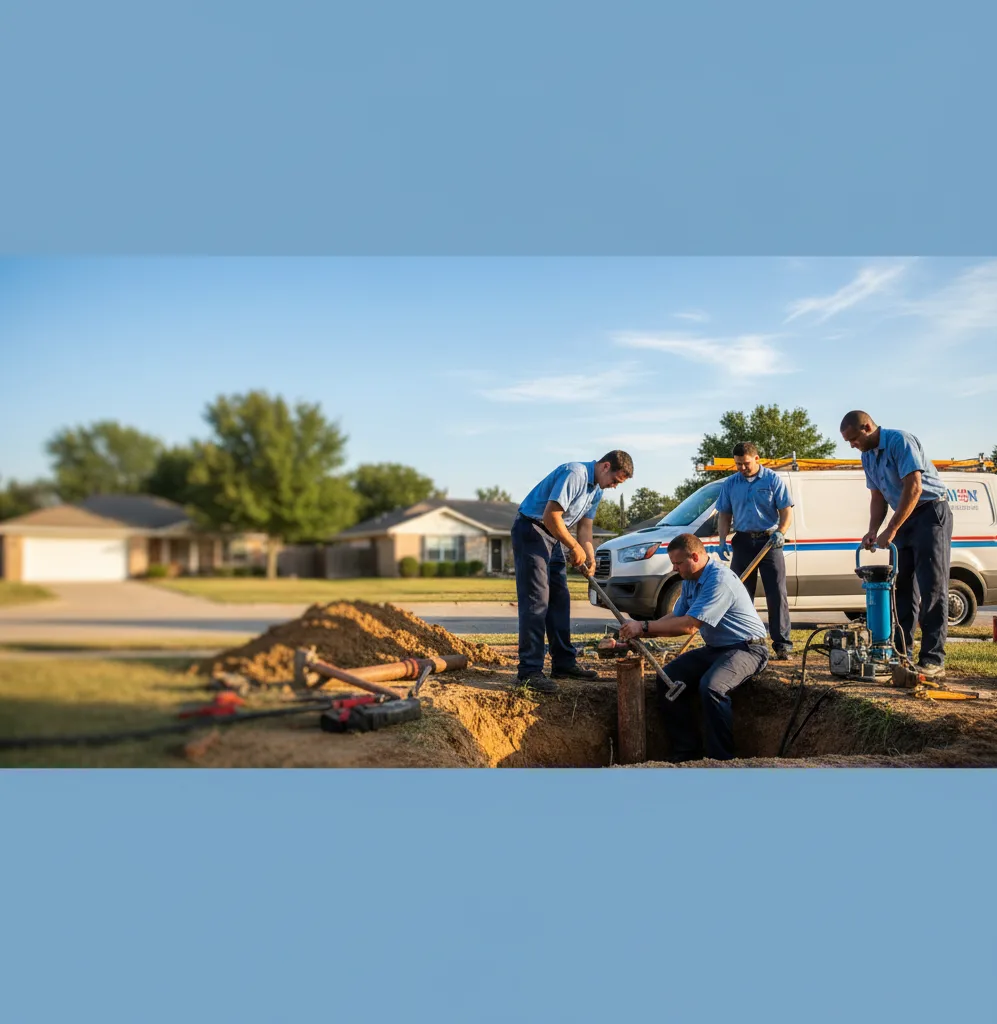
Technicians trace issues to their source rather than replacing parts at random. This approach keeps repairs focused on the actual problem.
Every installation follows current local codes so the finished job passes inspection without extra visits.
Customers receive a line-item breakdown before any work begins, showing parts and labor separately.
Services
Every water heater model has different access points, safety controls, and part requirements. Technicians review the specific unit on site and adjust the repair plan accordingly.
Get a quoteTechnicians arrive with the common fittings and safety components needed for most residential and light commercial installations. Every job is documented with photos of the completed connections and pressure test results so owners have a record of what was done.
Get a quoteGrant Plumbing begins each drain cleaning with a camera inspection, records findings, and completes the job with a follow-up flush. Homeowners receive a written summary of what was found and cleared.
Get a quoteThe company records pipe conditions with camera footage before and after every hydrojetting service. Work is performed by technicians who select pressure settings and nozzle types according to the pipe material found on site.
Get a quoteWork begins with a review of the home’s plumbing history and recent changes before any equipment is used. Findings are recorded on site and reviewed with the owner so decisions about repairs stay informed by actual conditions.
Get a quoteGrant Plumbing follows documented steps for locating, exposing, and restoring sewer lines. The same inspection and testing protocols apply whether the property is a single residence or a small commercial site.
Get a quoteTechnicians follow documented steps for isolation, diagnosis, and repair. Replacement parts are chosen to match the existing system rather than the lowest-cost option available that day.
Get a quoteMany homeowners assume the unit has failed completely when hot water disappears, yet the cause is often a single failed component such as a heating element, thermostat, or dip tube. A technician starts by checking power or gas supply, then tests temperature settings and pressure relief valves. Sediment buildup at the bottom of the tank is another frequent culprit that reduces capacity and shortens element life. Flushing the tank restores performance in many cases without replacement. The same process applies to tankless models, where scale on the heat exchanger or sensor errors can mimic total failure. Checking the expansion tank and incoming water pressure prevents repeat problems after the initial water heater repair.
A small puddle beneath the water heater does not always mean the tank itself has rusted through. Loose connections at the shutoff valve, temperature-pressure relief valve, or anode rod can produce the same symptom. Technicians inspect each fitting before recommending tank replacement. In electric models, a leaking element gasket is a frequent and inexpensive fix. Gas models may show condensation rather than a true leak, especially after recent high-volume use. Ruling out these simpler causes first avoids unnecessary equipment changes and the associated disposal costs. When the source remains unclear, leak detection pinpoints hidden problems.
Our process
The sequence begins with a description of the issue, followed by an on-site assessment, approval of the scope, completion of the repair, and a final walkthrough with the customer.
The process starts with a short conversation about the symptoms observed, followed by an on-site inspection of the equipment and surrounding piping. Voltage or gas pressure is verified first, then each control and safety device is tested in sequence. If replacement parts are needed, the technician lists the exact items and labor required before any work proceeds. After the repair, the system is cycled through a full heating cycle while monitoring for new leaks or unusual noises. Final steps include documenting the work performed and noting any items that may need attention on a future visit.
Tank-style units often require flushing or element replacement, while tankless units more commonly need descaling or sensor calibration. Access panels and venting requirements also differ, so the same symptom can involve entirely different steps depending on the model. Older homes may have hard piping that complicates removal of the existing unit. Technicians carry both types of parts on the truck to handle either style without delay. The diagnostic sequence remains the same regardless of equipment age. When a full swap is required, water heater installation follows the same safety standards.
Pricing
Final cost depends on the size of the unit, accessibility, and any additional parts required. The figures below represent typical starting points rather than firm quotes.
Water heater repair — starting at $285 Water heater replacement (50 gal) — starting at $1,450 Tankless water heater service — starting at $195 Drain cleaning — starting at $165 Leak repair — starting at $145 Fixture replacement — starting at $225 Sewer camera inspection — starting at $275 Gas line repair — starting at $325
Property managers often request water heater service when tenants report inconsistent temperatures or visible leaks. In these settings the technician first confirms the unit is the correct size for the number of occupants and fixtures. Access panels in shared utility rooms may require coordination with building staff, and shutoff valves are located before any disassembly. Older multi-unit buildings sometimes have shared venting or manifold piping that affects how individual units operate. After the repair, the technician notes any shared components that could affect neighboring units. This documentation helps the property manager plan future maintenance across the building.
Simple checks such as confirming the unit has power or gas, verifying the temperature dial has not been turned down, and listening for unusual sounds can narrow the issue. Homeowners should also note whether the problem occurs only at certain fixtures or throughout the house. These observations help the technician prepare the correct replacement parts. Standing water around the base should be reported immediately, as should any gas odor. Regular flushing of the tank once a year reduces sediment and extends equipment life, though the exact interval depends on local water hardness.
FAQ

The task requires shutting off power or gas, draining the tank, and working with electrical connections or gas fittings. Incorrect reassembly can create leaks or safety hazards. Most homeowners lack the specific tools needed to torque the new element correctly. A licensed technician performs the replacement and tests the unit afterward.
The interval depends on local water hardness and how much hot water the household uses. In areas with moderate hardness, once a year is usually sufficient. Homes with very hard water may benefit from flushing every six months. A technician can check the amount of sediment during the first service call and recommend a schedule based on what is found.
Noise usually comes from sediment that has settled at the bottom of the tank and is being heated repeatedly. The sound can range from popping to rumbling depending on how much material has accumulated. Flushing the tank removes most of the sediment and quiets the unit. In some cases the dip tube has broken and is directing cold water directly onto the heating element, which also creates noise.
Nearby
Coverage
Water Heater Repair & Plumber across the USA. Call (888) 205-2213.
Call (888) 205-2213